Cart
Courses: 0

Total: $00.00

Partners: Broward Partnership

Brief Description:


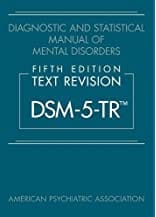
The Diagnostic and Statistical Manual of Mental Disorders has been the industry standard for the diagnosis of mental health disorders since 1952.  The fifth revision of the Manual was published in May 2013.  The text revision has published in March 2022.  This course will provide an overview of the organization, changes, and transitions from the previous edition, as well as controversies regarding the changes.


This course will award 2 continuing education hours for the boards listed below. 

Author:  Leesa M. Robertson, M.Ed., CAP, LMHC
Ms. Robertson, M.Ed., CAP, LMHC is a Licensed Mental Health Counselor in Florida and a Licensed Professional Counselor in Georgia.  She is credentialed in alcohol and other drug counseling.    

Course Information: 
Relevance and Target Audience:  This course is designed for master's level counselors and social workers, addiction professionals, and nurses who work with individuals with mental health issues.  
Content level:  Intermediate
Course Format:  This course is offered as a self-paced distance learning format (reading-based online activity)
System Requirements:  This course is offered online.  Internet connection required.

Course Completion Information:  To earn continuing education credit, professionals must register and pay the fee for the course.  They must read the content and demonstrate understanding by earning a minimum score of 70 percent on testing materials.  The certificate of completion will be able to be downloaded after the above is completed. Refunds and Cancellations will be granted upon request with the withdrawal of credit for the course.
For questions, concerns or to request special accommodations, please call 866-863-4225 or email [email protected].

CEBroker Provider Number:  50-204
CEBroker Course ID: 20-911270

CEBroker Provider Number Ohio SW: 50-32249
CEBroker Course ID: 20-911272

TO BEGIN THIS COURSE:
Click on Take Course below, right 

Objectives:

Upon successful completion of the course the learner will be able to:

  1. Explain the purpose of the DSM-5-TR.
  2. Identify the organizational structure of the DSM-5-TR.
  3. Describe the cultural formulation in the DSM-5-TR.
  4. Describe the relationship between DSM-5-TR and ICD-10.
  5. Explain changes in coding systems for DSM-5-TR
  6. Identify changes to the DSM-5-TR
  7. Describe controversies surrounding the DSM-5-TR and future versions of the DSM.

I.  American Psychiatric Association
II.  Purpose of the DSM
III.  DSM I through DSM 5
III.  Highlight DSM-5-TR changes
     A.  Revised text for almost all disorders with updated sections on associated features, prevalence, development and course, risk and prognostic factors, culture,                    diagnostic markers, suicide, and differential diagnosis.
     B.  Addition of the new diagnosis of prolonged grief disorder to Section II
     C.  Over 70 modified criteria sets with helpful clarifications since the publication of the DSM-5
     D.  Fully updated “Introduction” and “Use of the Manual” to guide usage and provide context for important terminology

     E.  Considerations of the impact of racism and discrimination on mental disorders integrated into the text
     F.  New ICD-10-CM codes to flag and monitor suicidal behavior and nonsuicidal self-injury that can be used without the requirement of another diagnosis
     G.  Updated ICD-10-CM codes implemented since 2013, including over 50 coding updates new to DSM-5-TR for substance intoxication and withdrawal and other                disorders
IV.  Organization of the Manual
V.  Development of Lifespan
VI.  Coding Disorders
VII.  Cultural Changes
VIII.  Gender Inclusive Language
IX.  Focus on Race and Discrimination
X.  Prolonged Grief Disorder
XI.  Unspecified Mood Disorder
XII.  Nonsuicidal Self-Harm

Board Approvals:

National Approvals

BaysideCEU has been approved by NBCC as an Approved Continuing Education Provider, ACEP #6098. Programs that do not qualify for NBCC credit are clearly identified. BaysideCEU is solely responsible for all aspects of the programs.
Bayside Continuing Education dba  BaysideCEU.com, provider 1793, is approved to offer social work continuing education by the Association of Social Work Boards (ASBW) Approved Continuing Education (ACE) program.  Organizations, not individual courses are approved as ACE providers.  State and provincial regulatory boards have the final authority to determine whether an individual course may be accepted for continuing education credit.  BaysideCEU.com maintains responsibility for this course.  ACE provider approval period: 02/04/2023 through 02/04/2026.  Social Workers participating in this course receive 2 continuing education credits.

This course has been approved by Bayside Continuing Education and Development Provider Number 81892, as a NAADAC Approved Education Provider, for educational credits. NAADAC Provider number 81892 is responsible for all aspects of the programming.

State Approvals
Beyond National Approvals which meet most state and certification board requirements individual state board approvals for this course:
CCAPP California Consortium of Addiction Programs and Professionals (CCAPP) Provider Number OS-21-336-0623

Florida Certification Board
Florida Board of Nursing
Registered Nurse:  General
Advanced Practice Registered Nurse:  General
Licensed Practical Nurse:  General
Florida Board of Nursing-Certified Nursing Assistants
Certified Nursing Assistant:  General
Florida Board of Clinical SW, MFT and MHC, #726
Licensed Clinical SW:  General
Licensed MFT:  General

Licensed MHC:  General
Certified Masters SW:  General
South Carolina Board of Social Work Examiners
Licensed Baccalaureate SW:  Social work-related continuing education not provided by a trained social worker 
Licensed Masters SW:  Social work-related continuing education not provided by a trained social worker 
Licensed Independent SW:  Social work-related continuing education not provided by a trained social worker 
Licensed Independent SW Clinical Practice:  Social work-related continuing education not provided by a trained social worker 
Licensed Independent SW Advanced Practice:  Social work-related continuing education not provided by a trained social worker 
Licensed Independent SW Dual:  Social work-related continuing education not provided by a trained social worker 
South Carolina Board of Examiners For Licensure of Professional Counselors And Therapists
Licensed Psycho-Educational Specialist:  Continuing Education Related to Psycho-education
Licensed Marriage and Family Therapist:  Continuing education related to marriage and family therapy 
Licensed Professional Counselor:  Continuing education related to professional counseling 
Licensed Addiction Counselor:  Continuing education related to addiction counseling
South Carolina Board of Nursing
Advanced Practice Registered Nurse:  General
Licensed Practical Nurse:  General
Registered Nurse:  General
Georgia Board of Nursing

Licensed Practical Nurse:  General
Registered Professional Nurse:  General
West Virginia Board of Social Work
Licensed  Independent Clinical Social Worker:  Category I
Licensed Graduate Social Worker:  Category I
Provisional License:  Category I
Licensed SW:  Category 1
Service Worker Registrant:  Category 1
Ohio Counselor, SW, MFT Board
Licensed Profesional Clinical Counselor:  Continuing Education for Counselors
Licensed Professional Counselor:  Continuing Education for Counselors
Licensed Independent SW:  Continuing Education for Social Workers

Registered Social Worker Assistant:  Continuing Education for Social Workers
Licensed Social Worker:  Continuing Education for Social Workers

CEBroker Provider Number:  50-204
CEBroker Course ID: 20-911270

CEBroker Provider Number Ohio SW: 50-32249
CEBroker Course ID: 20-911272

Many state boards accept hours approved by other state and national boards. If your board is not listed here please contact them directly.

Show More Take CourseTake Course

Brief Description:

Every year, lives are lost because of the spread of infections in healthcare facilities. Dental professionals can take steps to prevent the spread of infectious diseases in the dental office and laboratory. Proper handwashing, universal precautions, and knowledge can all help to lead the way to prevent the spread of infections.


This course will award 1 continuing education hour.  Please see the board approval information below.

Course ID: 20-900619
Provider Number:  50-204

TO BEGIN THIS COURSE:

Click on TAKE COURSE below, right  

Objectives:

Upon completion of this course the learner will be able to:

1. List 4 precautions to reduce the spread of infection.
2. Discuss HIV, TB, Hepatitis, and Influenza and how they are spread.
3. Discuss infection control.

Board Approvals:

The Florida Board of Dentistry

Many state boards accept hours approved by other state boards. If your board is not listed here please contact them.

Show More Take CourseTake Course

Brief Description:

The Florida Certification Board's Certified Behavioral Health Technician (CBHT) credential designates competency in the domains of Foundations of Behavioral Health; Direct Care and Recovery Support; Conflict Resolution and Safety; and Professional Responsibility. 

Florida Certification Board requires 10 hours of continuing education to renew a CBHT certification.  The bundle includes all of the courses necessary to meet this requirement.  

This bundle offers:

2 hours Incident Reporting in Florida (Documentation and Patient Confidentiality domain) 20-890125
3 hours Ethics and Boundaries  (Ethical and Professional Responsibilities domain) 20-764885 
4 Suicide and Risk Assessment (Clinical Competence domain) 20-894574  
1 hour Cultural Diversity, Sensitivity, and Competency (Ethical and Professional Responsibilities domain)  20-889891 NBCC
*If you would like to switch an elective course for a different course on our site please purchase the bundle and contact us at [email protected].

This bundle awards 10 hours of continuing education.  Please see below for board approvals.

Course IDs are listed above by each lesson title
Course Provider:  50-204

TO BEGIN THIS COURSE:

Click on TAKE COURSE below, right.

Objectives:

Upon successful completion the learner will be able to:

Understand and discuss what an incident is.
Explain why it is important to report incidents.
Understand how to report an incident.
Understand who to report an incident to.
Understand when to report an incident.
Explore how to write an incident.

The professional will be able to recognize many of the areas for potential boundary issues and ethical violations.
The professional will learn who mandates requirements that they should follow and how these mandates help them make good decisions.
The professional will understand how to make better boundary decisions to keep the client, the counseling relationship and themselves healthy.

Identify the risk factors associated with attempted suicide.
Explore effective assessment methods.
Examine the necessary levels of care.
Explore how to handle a caller in crisis.

Board Approvals:

National Approvals

BaysideCEU has been approved by NBCC as an Approved Continuing Education Provider, ACEP #6098. Programs that do not qualify for NBCC credit are clearly identified. BaysideCEU is solely responsible for all aspects of the programs.

The following lessons in the bundle are NBCC approved:
3 hours Ethics and Boundaries  20-890125
1 hour Cultural Diversity, Sensitivity, and Competency 20-889891

This course has been approved by Bayside Continuing Education and Development Provider Number 81892, as a NAADAC Approved Education Provider, for educational credits. NAADAC Provider number 81892 is responsible for all aspects of the programming.

The following lessons in the bundle are NAADAC approved:
4 Suicide and Risk Assessment 20-894574  

State Board Approvals:

Beyond National Approvals which meet most state and certification board requirements individual state board approvals for this course:
CEBroker Provider ID:  50-204
All lessons are approved by the Florida Certification Board 5121-

Many state boards accept hours approved by other state and national boards. If your board is not listed please contact them.

Show More Take CourseTake Course

Brief Description:

Medical errors comprise the largest issue facing this country about health care. This course was designed to educate those in the healthcare industry and specifically the mental health field on the magnitude of medical errors, their adverse effects, and methods to analyze errors to avoid future mishaps.


Authors:  Stacey Nevel, M.Ed., CAP, LMHC, Stephanie Schiller, LCSW

Relevance:  This course is designed for master's level counselors and nurses.  It will help them to understand how to avoid errors and how to report and analyze errors to avoid them in the future. 

This course will award 2 continuing education hours.

Course: 20-890107
Provider number:  50-204 

TO BEGIN THIS COURSE: 

Click on TAKE COURSE below, right.

Objectives:

Upon successful completion of this course the learner will be able to:

1. Describe the magnitude of medical errors and the effect on patient safety.
2. Identify processes to approach error reduction and prevention.
3. Identify areas where errors frequently occur.
4. Explore factors that impact the occurrence of medical errors.
5. Describe processes to improve patient outcomes.
6. Identify the needs of special populations.
7. Discuss the educational needs of clients and families.
8. Explore what the mental health professional can do to ensure the safety of our clients.
9. Discuss the importance of a reporting process for errors.

Board Approvals:

National Approvals

BaysideCEU has been approved by NBCC as an Approved Continuing Education Provider, ACEP #6098.  Programs that do not qualify for NBCC credit are clearly identified.  BaysideCEU is solely responsible for all aspects of the programs.

This course has been approved by Bayside Continuing Education and Development Provider Number 81892, as a NAADAC Approved Education Provider, for educational credits. NAADAC Provider number 81892 is responsible for all aspects of the programming.

State Approvals
Beyond National Approvals which meet most state and certification board requirements individual state board approvals for this course:

CCAPP California Consortium of Addiction Programs and Professionals (CCAPP) Provider Number OS-21-336-0623

Florida Certification Board
Florida Board of Nursing
Florida Board of Nursing-Certified Nursing Assistants
Florida Board of Clinical SW, MFT and MHC, #726
Ohio Counselor, Social Worker, And Marriage and Family Therapist Board for LPC hours
South Carolina Board of Social Work Examiners 
South Carolina Board of Examiners For Licensure of Professional Counselors And Therapists
South Carolina Board of Nursing

CEBroker Provider ID:  50-204
CEBroker Course ID: 20-890107

Many state boards accept hours approved by other state and national boards. If your board is not listed here please contact them directly.

States that accept NBCC hours for LPC or LMHC (please verify with your board)
All 50 state licensing boards accept hours approved by the NBCC for LPCs or LMHCs.

States that accept NBCC hours for LMFT (please verify with your board)

Alabama, Arizona, Arkansas, California, Connecticut, Delaware, Georgia, Idaho, Indiana, Iowa, Kansas, Maryland, Missouri, Nebraska, New Hampshire, New Jersey, New Mexico, North Carolina, Oregon, Pennsylvania,  Rhode Island, South Carolina, South Dakota, Tennessee, Vermont, Virginia, Washington DC, Washington, Wisconsin

States that accept NBCC hours for SW (please verify with your board)

Arizona, California, Indiana, Kansas, Kentucky, Montana, Nebraska, New Hampshire, Oregon, Pennsylvania, Washington, Wisconsin
Show More Take CourseTake Course

Brief Description:

Every day counselors, nurses, psychiatric technicians, and others are called upon to intervene in crisis situations that may become dangerous if not handled properly.

This course will explore the prevention of aggressive behavior and crisis intervention techniques, which can include verbal de-escalation and physical interventions. We will identify the definition of aggression, warning signs of aggressive behavior, strategies to diffuse aggressive situations, crisis intervention techniques, and staff responsibilities after an event.


This course will award 2 continuing education hours.  Please see the board approval box for course approvals.

Author:  Leesa M. Robertson, M.Ed., CAP, LMHC
Ms. Robertson, M.Ed., CAP, LMHC is a Licensed Mental Health Counselor in Florida and a Licensed Professional Counselor in Georgia.  She is credentialed in alcohol and other drug counseling.    

Course Information: 
Relevance and Target Audience:  This course is designed for master's level counselors and social workers, addiction professionals, and nurses who have direct care time with clients who may display aggressive behavior.  This course will help these professionals prevent and de-escalate volatile situations.
Content level:  Intermediate
Course Format:  This course is offered as a self-paced distance learning format (reading-based online activity)
System Requirements:  This course is offered online.  Internet connection required.

Course Completion Information:  To earn continuing education credit, professionals must register and pay the fee for the course.  They must read the content and demonstrate understanding by earning a minimum score of 70 percent on testing materials.  The certificate of completion will be able to be downloaded after the above is completed. Refunds and Cancellations will be granted upon request with the withdrawal of credit for the course.
For questions, concerns or to request special accommodations, please call 866-863-4225 or email [email protected] Course ID:  20-903517

CEBroker Provider Number:  50-204
CEBroker Course ID:  20-970990
CEBroker Provider Number: 50-32249
CEBroker Course ID:  OHSW 20-962342

TO BEGIN THIS COURSE:
Click on Take Course below, right 

Objectives:

Upon successful completion of this course the learner will be able to:

1. Identify aggression.
2. Identify warning signs for aggressive behavior.
3. Identify strategies for de-escalating aggression.
4. Describe examples of crisis intervention techniques to use when violence occurs.

I.  Aggression
II. Two Forms of Aggressive Behavior
     A.  Verbal
     B.  Physical
III.  Application
IV.  Anxiety Level
V.  The Supportive Staff Response
V.  The Agitated Client
VI.  Setting Limits
VII.  Verbal De-escalation
VIII.  Tension Reduction
IX.  Nonverbal Communication
X.  Warning Signs Of Aggressive Behavior  

XI.  Strategies for Diffusion
XII.  Intervention Techniques

Board Approvals:

National Approvals

Bayside Continuing Education dba  BaysideCEU.com, provider 1793, is approved to offer social work continuing education by the Association of Social Work Boards (ASBW) Approved Continuing Education (ACE) program.  Organizations, not individual courses are approved as ACE providers.  State and provincial regulatory boards have the final authority to determine whether an individual course may be accepted for continuing education credit.  BaysideCEU.com maintains responsibility for this course.  ACE provider approval period: 02/04/2023 through 02/04/2026.  Social Workers participating in this course receive 2 continuing education credits.
BaysideCEU has been approved by NBCC as an Approved Continuing Education Provider, ACEP #6098. Programs that do not qualify for NBCC credit are clearly identified. BaysideCEU is solely responsible for all aspects of the programs.

 This course has been approved by Bayside Continuing Education and Development Provider Number 81892, as a NAADAC Approved Education Provider, for educational credits. NAADAC Provider number 81892 is responsible for all aspects of the programming.
State Approvals
 CCAPP California Consortium of Addiction Programs and Professionals (CCAPP) Provider Number OS-21-336-0623

Florida Certification Board
Florida Board of Nursing
Registered Nurse:  General
Advanced Practice Registered Nurse:  General
Licensed Practical Nurse:  General
Florida Board of Nursing-Certified Nursing Assistants
Certified Nursing Assistant General
Florida Board of Clinical SW, MFT and MHC, #726
Licensed Clinical Social Worker:  General
Licensed Marriage and Family Therapist:  General
Licensed Mental Health Counselor:  General
South Carolina Board of Social Work Examiners
Licensed Baccalaureate SW:  Social work-related continuing education not provided by a trained social worker 
Licensed Masters SW:  Social work-related continuing education not provided by a trained social worker 
Licensed Independent SW:  Social work-related continuing education not provided by a trained social worker 

Licensed Independent SW Clinical Practice:  Social work-related continuing education not provided by a trained
social worker 
Licensed Independent SW Advanced Practice:  Social work-related continuing education not provided by a trained
social worker 
Licensed Independent SW Dual:  Social work-related continuing education not provided by a trained social worker 
South Carolina Board of Examiners For Licensure of Professional Counselors And Therapists
Licensed Psycho-Educational Specialist:  Continuing Education Related to Psycho-education
Licensed Marriage and Family Therapist:  Continuing education related to marriage and family therapy 
Licensed Professional Counselor:  Continuing education related to professional counseling 
Licensed Addiction Counselor:  Continuing education related to addiction counseling
South Carolina Board of Nursing
Advanced Practice Registered Nurse:  General
Licensed Practical Nurse:  General
Registered Nurse:  General
Georgia Board of Nursing
Licensed Practical Nurse:  General
Registered Professional Nurse:  General
West Virginia Board of Social Work
Licensed  Independent Clinical Social Worker:  Category I
Licensed Graduate Social Worker:  Category I
Provisional License:  Category I
Licensed SW:  Category 1
Service Worker Registrant:  Category 1
Ohio Counselor, SW, MFT Board
Licensed Profesional Clinical Counselor:  Continuing Education for Counselors
Licensed Professional Counselor:  Continuing Education for Counselors
Licensed Independent SW:  Continuing Education for Social Workers
Registered Social Worker Assistant:  Continuing Education for Social Workers
Licensed Social Worker:  Continuing Education for Social Workers

CEBroker Provider Number:  50-204
CEBroker Course ID:  20-882169
CEBroker Provider Number: 50-32249
CEBroker Course ID:  OHSW 20-915520

Many state boards accept hours approved by other state and national boards. If your board is
not listed here please contact them directly.

Show More Take CourseTake Course

Brief Description:

The Florida Certification Board's Certified Behavioral Health Technician (CBHT) credential designates competency in the domains of Foundations of Behavioral Health; Direct Care and Recovery Support; Conflict Resolution and Safety; and Professional Responsibility. 

Florida Certification Board requires 10 hours of continuing education to renew a CBHT certification.  The bundle includes all of the courses necessary to meet this requirement.  

This bundle offers:

2 hours Incident Reporting in Florida (Documentation and Patient Confidentiality domain) 20-890125
3 hours Ethics and Boundaries  (Ethical and Professional Responsibilities domain) 20-764885 
4 Suicide and Risk Assessment (Clinical Competence domain) 20-894574  
1 hour Cultural Diversity, Sensitivity, and Competency (Ethical and Professional Responsibilities domain)  20-889891 NBCC
*If you would like to switch an elective course for a different course on our site please purchase the bundle and contact us at [email protected].

This bundle awards 10 hours of continuing education.  Please see below for board approvals.

Course IDs are listed above by each lesson title
Course Provider:  50-204

TO BEGIN THIS COURSE:

Click on TAKE COURSE below, right.

Objectives:

Upon successful completion the learner will be able to:

Understand and discuss what an incident is.
Explain why it is important to report incidents.
Understand how to report an incident.
Understand who to report an incident to.
Understand when to report an incident.
Explore how to write an incident.

The professional will be able to recognize many of the areas for potential boundary issues and ethical violations.
The professional will learn who mandates requirements that they should follow and how these mandates help them make good decisions.
The professional will understand how to make better boundary decisions to keep the client, the counseling relationship and themselves healthy.

Identify the risk factors associated with attempted suicide.
Explore effective assessment methods.
Examine the necessary levels of care.
Explore how to handle a caller in crisis.

Board Approvals:

National Approvals

BaysideCEU has been approved by NBCC as an Approved Continuing Education Provider, ACEP #6098. Programs that do not qualify for NBCC credit are clearly identified. BaysideCEU is solely responsible for all aspects of the programs.

The following lessons in the bundle are NBCC approved:
3 hours Ethics and Boundaries  20-890125
1 hour Cultural Diversity, Sensitivity, and Competency 20-889891

This course has been approved by Bayside Continuing Education and Development Provider Number 81892, as a NAADAC Approved Education Provider, for educational credits. NAADAC Provider number 81892 is responsible for all aspects of the programming.
The following lessons in the bundle are NAADAC approved:
4 Suicide and Risk Assessment 20-894574  

State Board Approvals:

Beyond National Approvals which meet most state and certification board requirements individual state board approvals for this course:
CEBroker Provider ID:  50-204
All lessons are approved by the Florida Certification Board 5121-

Many state boards accept hours approved by other state and national boards. If your board is not listed please contact them.

Show More Take CourseTake Course

Domestic Violence

Price
$20.00
Brief Description:

This course will review the statistics and prevalence of domestic violence in our society. We will define domestic violence and its various types of abuse.

The course will review the dynamics of violent relationships. Violent relationships follow a predictable cycle of violence. This course will discuss this cycle and review its patterns and ways of screening through multiple case studies. The course will delve into special populations and associated risk factors. Upon completion of the course, the professional will understand specific resources available for those in need.

This course will award 2 continuing education hours.  Please see the board approval box for course approval information.

Author:  Leesa M. Robertson, M.Ed., CAP, NCC, LMHC
Ms. Robertson, M.Ed., CAP, LMHC, is a Licensed Mental Health Counselor in Florida and a Licensed Professional Counselor in Georgia.  She is credentialed in alcohol and other drug counseling.    

Course Information:
Relevance and Target Audience:  This course is designed for master's level counselors and social workers, addiction professionals, and nurses working with individuals at risk for violence from an intimate relationship.
Content level:  Intermediate
Course Format:  This course is offered as a self-paced distance learning format (reading-based online activity)
System Requirements:  This course is offered online.  Internet connection required.

Course Completion Information:  To earn continuing education credit, professionals must register and pay the fee for the course.  They must read the content and demonstrate understanding by earning a minimum score of 70 percent on testing materials.  The certificate of completion will be able to be downloaded after the above is completed. Refunds will be granted upon request with the withdrawal of credit for the course.
For questions, concerns, or to request special accommodations, please call 866-863-4225 or email [email protected].

CEBroker Provider Number:  50-204
CEBroker Course ID:  20-88919
CEBroker Provider Number: 50-32499
CEBroker Course ID OH SW:  20-972484    

TO BEGIN THIS COURSE:
Click on Take Course below, right 

Objectives:

Upon successful completion of this course the learner will be able to:

1. Describe the prevalence of domestic violence.
2. Describe the definition of domestic violence.
3. Identify the six types of domestic violence.
4. Describe the dynamics of the violent relationship.
5. Identify the cycle of violence.
6. Describe how healthcare professionals can recognize the signs and screen for domestic violence.
7. Identify special populations and discuss associated risk factors.
8. Describe the impact of domestic violence.
9. Identify legal and social resources available.

Course Outline:

I.  Introduction with statistics
II.  History of Domestic Violence
III.  Family history of abusers
V.  Reporting
VI.  Myths Regarding Domestic Violence
VII.  Legal Considerations
VIII.  Types of Violence
IX.  Symptoms of Abuse/Violence
X.  Dynamics of Domestic Violence Relationships
XI.  
Risk Factors for Abuse
XII.  Battering in Special Populations

Board Approvals:

National Approvals

Bayside Continuing Education dba  BaysideCEU.com, provider 1793, is approved to offer social work continuing education by the Association of Social Work Boards (ASBW) Approved Continuing Education (ACE) program.  Organizations, not individual courses, are approved as ACE providers.  State and provincial regulatory boards have the final authority to determine whether an individual course may be accepted for continuing education credit.  BaysideCEU.com maintains responsibility for this course.  ACE provider approval period: 02/04/2023 through 02/04/2026.  Social Workers participating in this course receive 2 continuing education credits

BaysideCEU has been approved by NBCC as an Approved Continuing Education Provider, ACEP #6098. Programs that do not qualify for NBCC credit are clearly identified. BaysideCEU is solely responsible for all aspects of the programs.

This course has been approved by Bayside Continuing Education and Development Provider Number 81892 as a NAADAC Approved Education Provider for educational credits. NAADAC Provider number 81892 is responsible for all aspects of the programming.
State Approvals
Beyond National Approvals, which meet most state and certification board requirements, individual state board approvals for this course:

CCAPP California Consortium of Addiction Programs and Professionals (CCAPP) Provider Number OS-21-336-0623

Florida Certification Board
Florida Board of Nursing
Registered Nurse:  General
Advanced Practice Registered Nurse:  General
Licensed Practical Nurse:  General
Florida Board of Nursing-Certified Nursing Assistants
Certified Nursing Assistant General
Florida Board of Clinical SW, MFT and MHC, #726
Licensed Clinical Social Worker:  General
Licensed Marriage and Family Therapist:  General
Licensed Mental Health Counselor:  General
South Carolina Board of Social Work Examiners
Licensed Baccalaureate SW:  Social work-related continuing education not provided by a trained social worker 
Licensed Masters SW:  Social work-related continuing education not provided by a trained social worker 
Licensed Independent SW:  Social work-related continuing education not provided by a trained social worker 
Licensed Independent SW Clinical Practice:  Social work-related continuing education not provided by a trained social worker 
Licensed Independent SW Advanced Practice:  Social work-related continuing education not provided by a trained social worker 
Licensed Independent SW Dual:  Social work-related continuing education not provided by a trained social worker 
South Carolina Board of Examiners For Licensure of Professional Counselors And Therapists
Licensed Psycho-Educational Specialist:  Continuing Education Related to Psycho-education
Licensed Marriage and Family Therapist:  Continuing education related to marriage and family therapy 
Licensed Professional Counselor:  Continuing education related to professional counseling 
Licensed Addiction Counselor:  Continuing education related to addiction counseling
South Carolina Board of Nursing
Advanced Practice Registered Nurse:  General
Licensed Practical Nurse:  General
Registered Nurse:  General
Georgia Board of Nursing
Licensed Practical Nurse:  General
Registered Professional Nurse:  General
West Virginia Board of Social Work

Licensed  Independent Clinical Social Worker:  Category I
Licensed Graduate Social Worker:  Category I
Provisional License:  Category I
Licensed SW:  Category 1
Service Worker Registrant:  Category 1
Ohio Counselor, SW, MFT Board

Licensed Profesional Clinical Counselor:  Continuing Education for Counselors
Licensed Professional Counselor:  Continuing Education for Counselors
Licensed Independent SW:  Continuing Education for Social Workers

Registered Social Worker Assistant:  Continuing Education for Social Workers
Licensed Social Worker:  Continuing Education for Social Workers

CEBroker Course ID:  20-903517
CEBroker Provider Number:  50-204
CEBroker Course ID:  20-889919
CEBroker Provider Number: 50-32499

Many state boards accept hours approved by other state and national boards. If your board is not listed here, please contact them directly.

Show More Take CourseTake Course

Broward Partnership

All Staff (Clinical, Non-clinical, Safety, Admin)
Abuse Reporting
Active Shooter
Aggression Control Training
Baker Act
First Aid
Marchman Act
Sexual Harassment
Incident Reporting
Motivational Interviewing
HIV/Aids Update for Fl HC
Co-Occurring Disorders
Assessing MH and SA
Diagnostic and Statistical Manual of MH
Trauma, Abuse, Neglect, Exploitation

Therapists
Substance Abuse Tx and Couns Concepts

BHTs
Florida CBHT Initial Certification-30hrs
OR
Florida CBHT Renewal-10 hrs

Dental Staff
Dental Health Fluoride Treatment
Patient Compliance and Oral Care
Hypersensitivity Oral Health
Inf Control in Oral HC
Dental Anxiety